One system, repaired as one
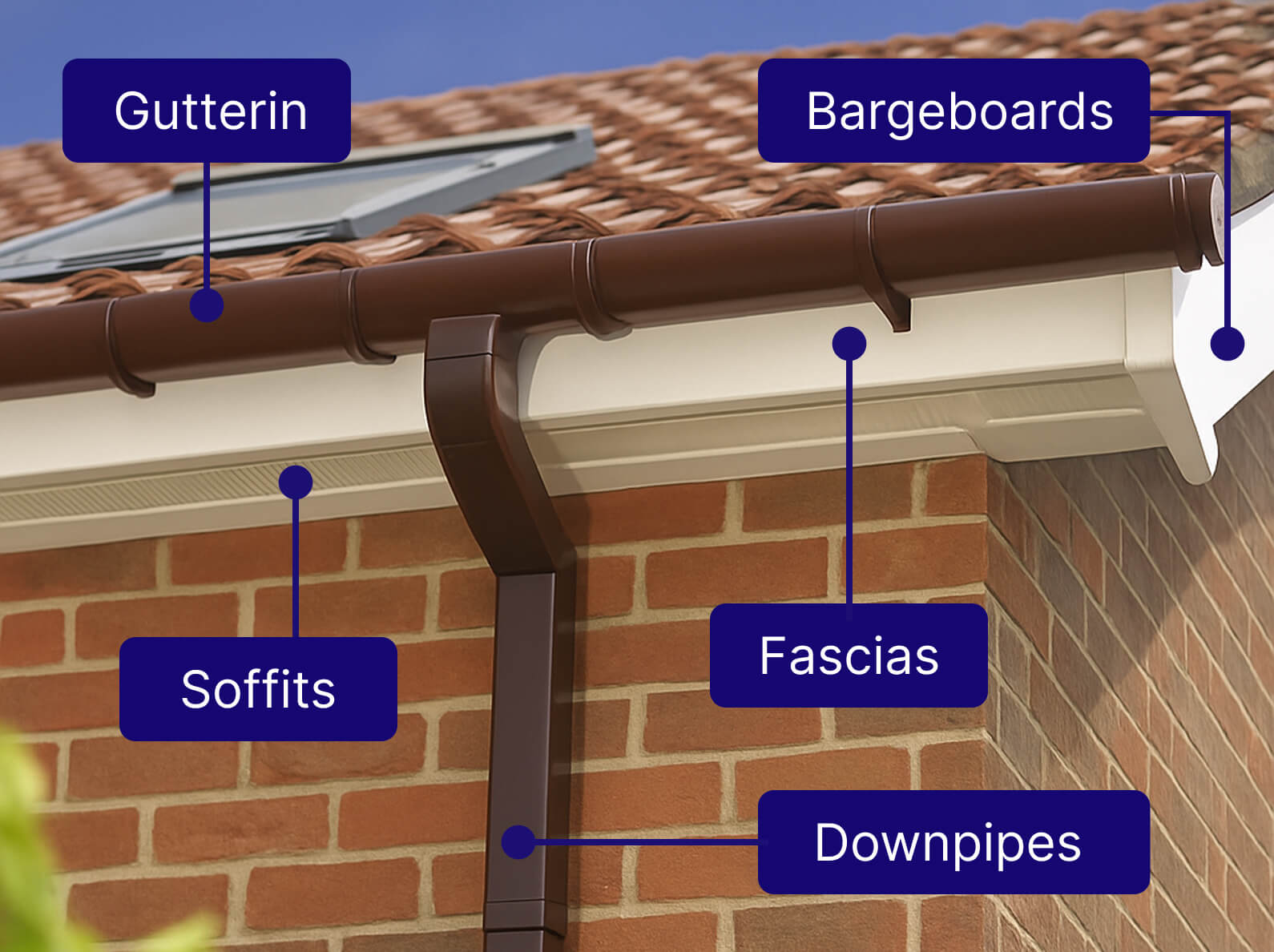
The edge of a roof is a system. Water comes off the tiles into the gutter; the gutter hangs on the fascia; the fascia is fixed to the rafter feet; the soffit closes the underside and lets the roof breathe; the bargeboards do the same job on the gables. When one part fails it wets the next — a dripping gutter joint rots the fascia, a rotten fascia drops the gutter, a dropped gutter soaks the soffit and the wall. Roofline repair means looking at the whole edge and fixing what has failed and what caused it, so the repair holds.
We are timber repair specialists by trade, which shapes how we do this: we keep sound boards and repair them, we replace only what is past saving, and we fit uPVC where it is the right answer for the house rather than as a default.
The Cambridge houses we see most
- Victorian and Edwardian terraces and villas — Romsey, Petersfield, Mill Road, Newnham, De Freville, Chesterton: moulded fascias, boxed eaves, decorative bargeboards, shared gutters. Repair, replicate, keep the detail; consent-aware in the conservation areas.
- 1930s semis — Cherry Hinton, Coleridge, Queen Edith’s, Arbury Road: long fascia runs, deep soffits, gutter joints that have leaked for decades. Often replacement, front and back priced separately.
- Post-war estates — Arbury, King’s Hedges, parts of Trumpington and Cherry Hinton: softwood boards and hardboard soffits at the end of their life, no roof ventilation, concrete tiles shedding moss. Usually best replaced in one go.
- 1990s–2000s developments — Cambourne, Trumpington Meadows, the village extensions: first-generation uPVC capping over rotten timber, now bowing. Stripped and refitted as a full replacement.
- The villages — Girton, Histon, Cottenham, the Shelfords, Fulbourn, Sawston: everything from thatched-cottage eaves to bungalow rooflines.
What a roofline repair covers
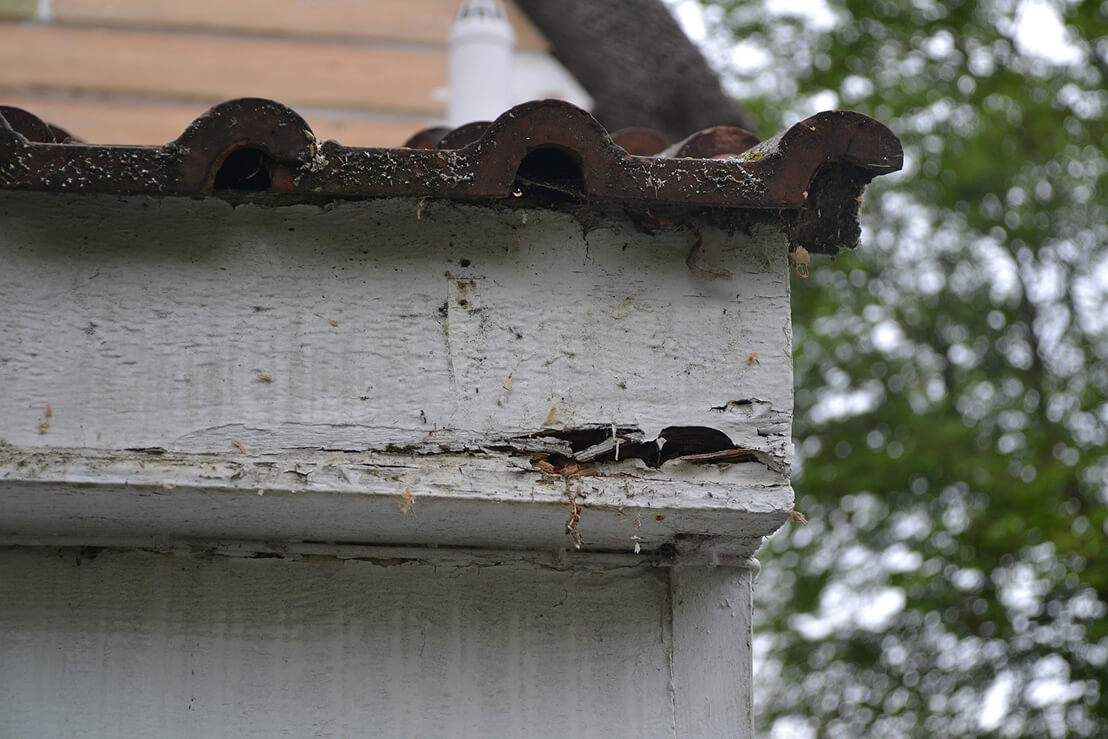
- Fascias — rotten ends spliced, split boards consolidated, soft sections cut out and replaced; whole runs replaced where needed. Fascia and soffit repair.
- Soffits — sagging, stained and holed boards replaced in sections with vented board; ply and hardboard soffits from the 1960s–80s replaced outright.
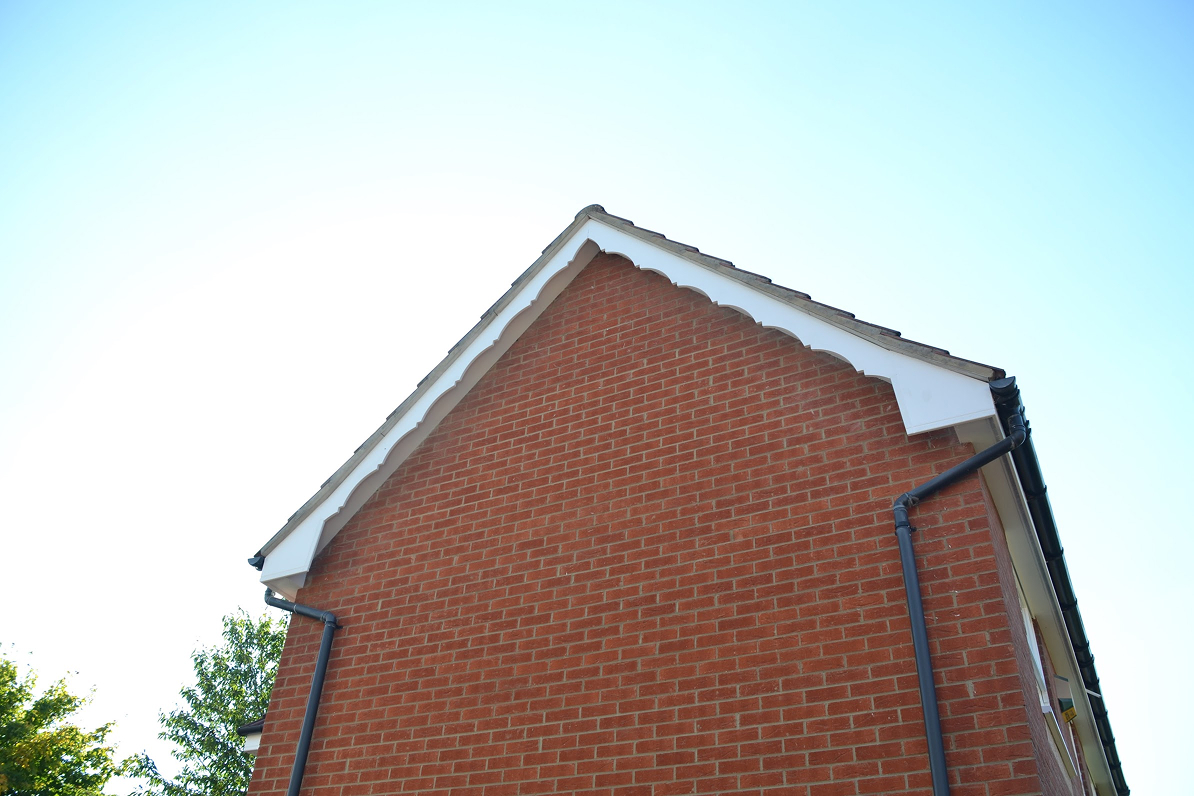
- Bargeboards — repaired, replicated or replaced on the gables, with the verge remade so the top edge stays dry. Bargeboard replacement.
- Guttering — joints, falls, brackets, outlets and downpipes, re-hung into sound timber; full replacement where the run is past it. Gutter repairs.
- Eaves protection — felt support trays under the bottom course of tiles where the underlay has perished and water is running behind the fascia.
- Ventilation — over-fascia vents and vented soffit to stop condensation in the loft, especially after a roofline has been sealed up.
- Bird combs, gutter guards and verge repairs — closing the gaps that let birds, wasps and water in.
- Decoration — every repair is primed and painted or stained before we leave.
How a roofline survey works
- Every elevation, from a ladder We walk the roofline with an awl and a camera: probing the boards, checking the gutter joints and falls, looking behind the soffit at the rafter feet where we can, and noting the ventilation and the verge. You get the photographs.
- A quote by elevation Each side of the house is listed with what is sound, what is a repair, what is a replacement and what it costs — so you can do the back this year and the front next, if that suits the budget.
- Repairs first Rot cut back to dry timber, sections spliced in, boards consolidated and filled, brackets refixed into sound wood, gutters re-set to fall, verge repointed or dry-verged.
- Replacement where it is needed Runs that are past saving come off completely — never capped — with the rafter ends checked and made good and eaves trays fitted before the new boards go on.
- Finish and hand over Paint or stain, gutters running, site clear, and a note of when the roofline will next need looking at.
The houses we see most
Across East Anglia the roofline problems come in recognisable families. The Victorian and Edwardian terraces of Cambridge, Norwich and Ipswich have moulded fascias, boxed eaves and decorative bargeboards that deserve repair rather than replacement. The 1930s semis of Chelmsford, Luton, Bedford and Northampton have deep soffits and long fascia runs where the gutter joints have been leaking for decades. The post-war estates of Peterborough, Milton Keynes, Haverhill, Basildon and Corby have softwood boards and hardboard soffits at the end of their life, and are usually best replaced in one go. And the timber-framed and thatched cottages of Suffolk, Essex and south Cambridgeshire have eaves detail that needs a joiner's eye and, often, the conservation officer's agreement. We work on all of them.
Not sure what has failed? Our guides to the signs of fascia and soffit damage and the most common roofline problems will help you describe what you can see from the ground.
Roofline repairs across East Anglia
We repair rooflines throughout Cambridgeshire, Norfolk, Suffolk, Essex, Bedfordshire, Northamptonshire and Buckinghamshire — Cambridge, Peterborough, Ely, Huntingdon, St Neots and Wisbech; Norwich, King's Lynn, Great Yarmouth and Thetford; Ipswich, Bury St Edmunds, Lowestoft and Newmarket; Colchester, Chelmsford, Southend, Braintree and Harlow; Bedford, Luton and Dunstable; Northampton, Kettering, Corby and Wellingborough; Milton Keynes, Aylesbury and High Wycombe. Send photographs of each elevation with your postcode, or call to arrange a survey.